

In public spaces such as train stations, shopping malls, hospitals, or sidewalks, hundreds of people move around daily. Among these are individuals with vision impairments who rely on their other senses—and the built environment—for safe navigation. It’s crucial that property owners, builders, and urban planners install the right safety features to make these areas accessible for everyone. One of the most effective tools for this purpose is Tactile Ground Surface Indicators (TGSI).
At Eminent Tactiles, we specialise in manufacturing and supplying Polyurethane (PU) Tactile Indicators and a wide range of other safety solutions. Our products are designed to ensure safety, accessibility, and compliance with relevant standards, all while offering a modern and visually pleasing design.
What Are PU Tactile Indicators and Why Are They Important?
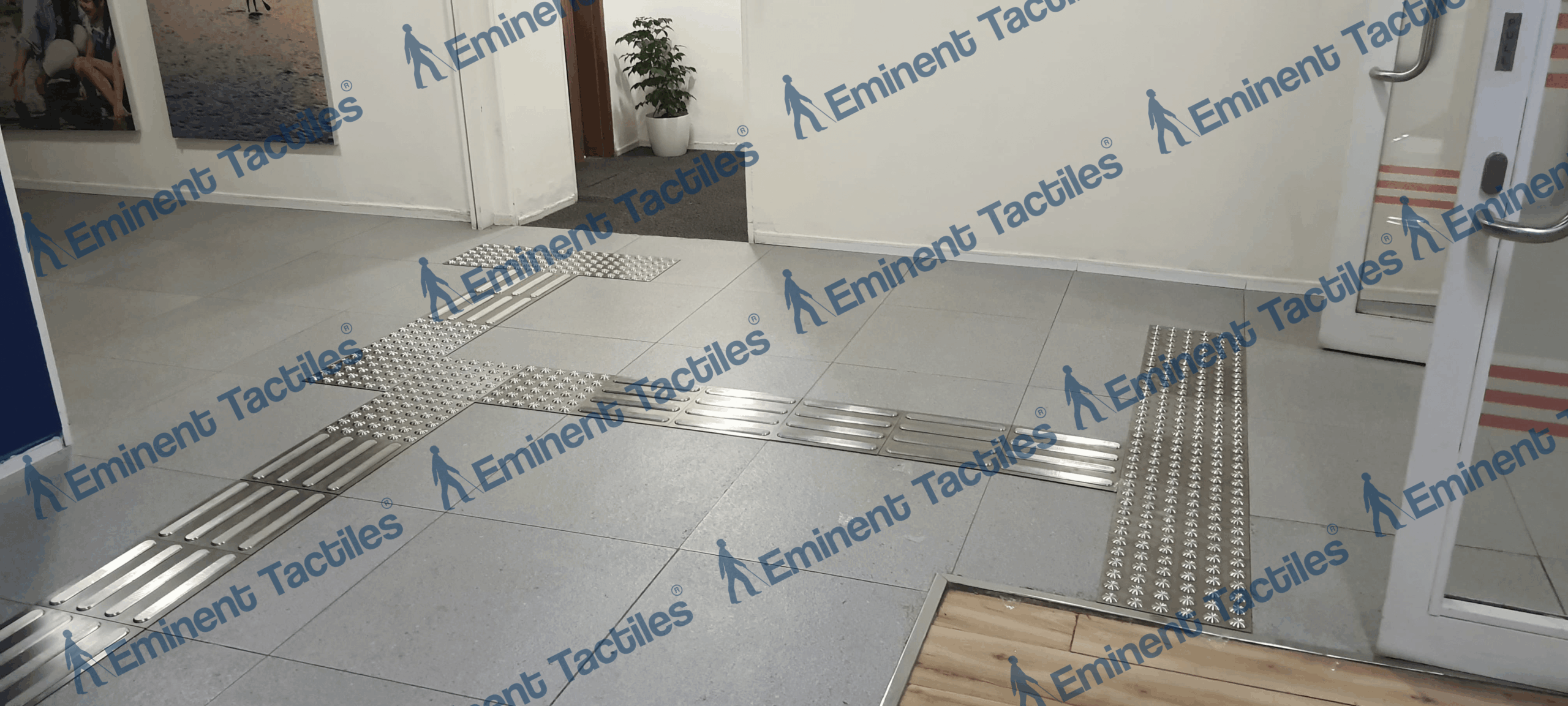
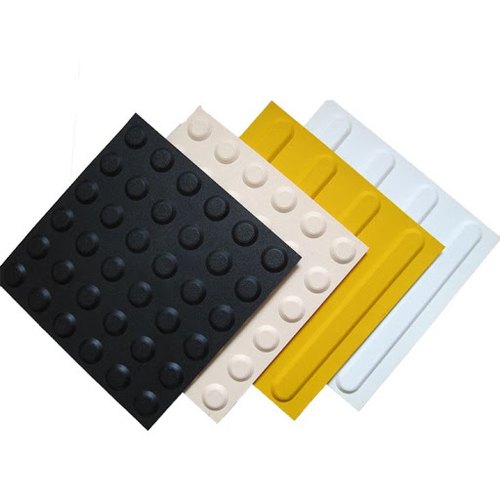
Polyurethane tactile indicators, also known as Tactile Ground Surface Indicators (TGSI), are raised surface features installed on floors and pavements to assist people who are blind or vision-impaired in navigating public spaces safely and independently. These indicators provide essential sensory feedback through touch—either underfoot or with the help of a cane, alerting users to potential hazards or guiding them along a safe path.
There are two main types of tactile indicators:
- Warning (Hazard) Indicators: These feature a raised stud pattern and are typically placed at the top and bottom of staircases, pedestrian crossings, ramps, and platform edges. They signal the presence of a potential danger or a change in level.
- Directional Indicators: These consist of raised, parallel bars and are used to guide individuals through open spaces, corridors, or to important facilities like public transport access points or building entrances.
Why Choose PU (Polyurethane) Tactile Indicators?
At Eminent Tactiles, we use UV-stabilised, high-strength polyurethane to manufacture our tactile indicators. Polyurethane offers several benefits over traditional materials like concrete or ceramic:
- High Durability: PU is resistant to wear, impact, and weather extremes. It doesn’t crack, peel, or fade, even in high foot traffic areas.
- Superior Flexibility: When used as a stud instead of a full tile, it conforms better to the surface beneath, allowing for a smoother, more natural installation.
- Slip Resistance: Our tactile studs are designed to be non-slip, providing safety even in wet or oily conditions.
- Visual Contrast: PU indicators are available in various colours that contrast with the surrounding ground, enhancing visibility for those with partial vision.
Our Product Range
Eminent Tactiles offers a comprehensive range of tactile and safety products, including:
- PU Tactile Stud Indicators
- Directional Strips
- Integrated Tactile Tiles
- Adhesive Tiles
- Stair Nosing
- Anti-slip Noise Reduction Solutions
- Safety Bollards
- Bike Racks
- Wheel Stops and more
Easy Installation with Peel and Adhere System
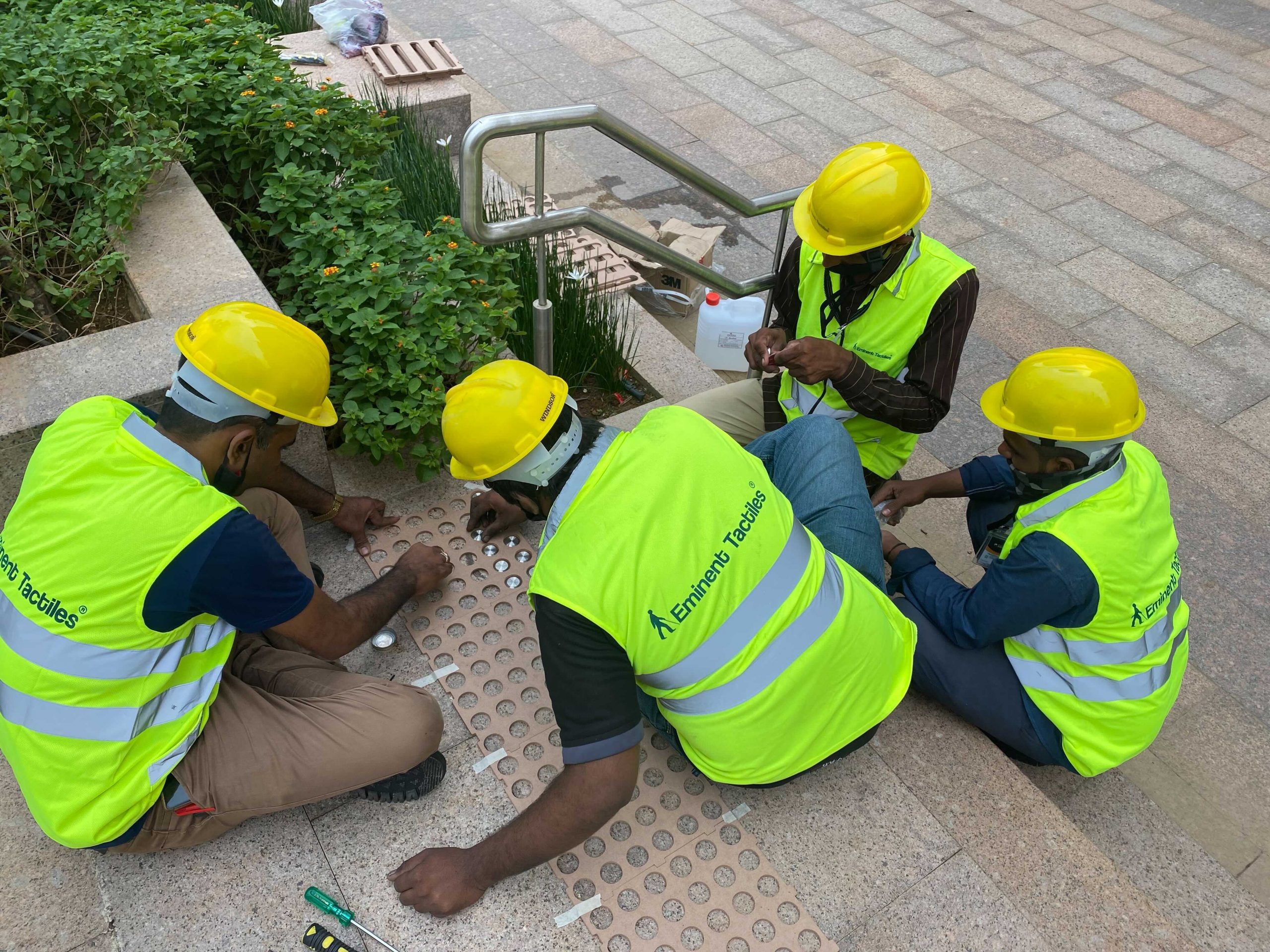
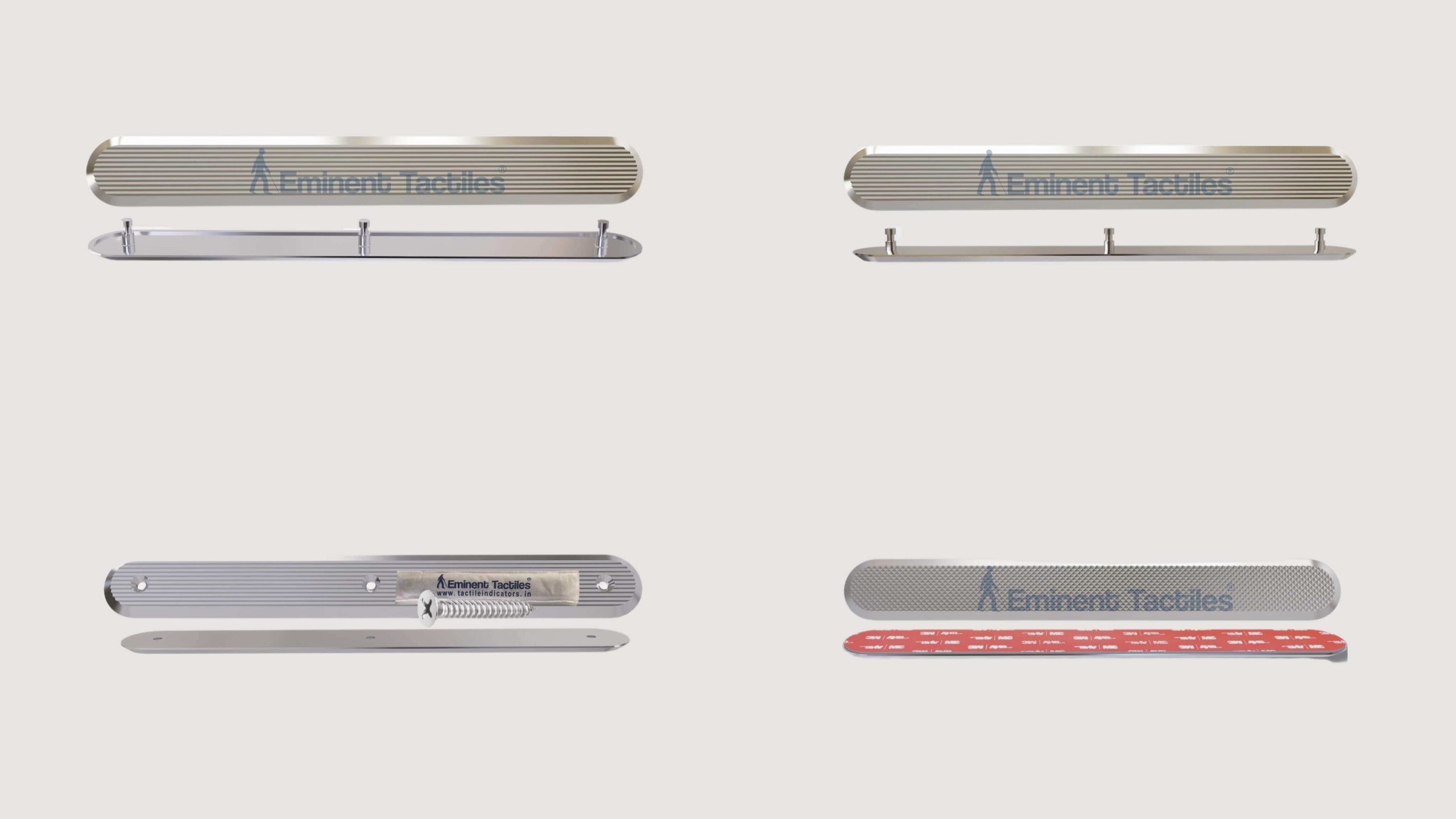
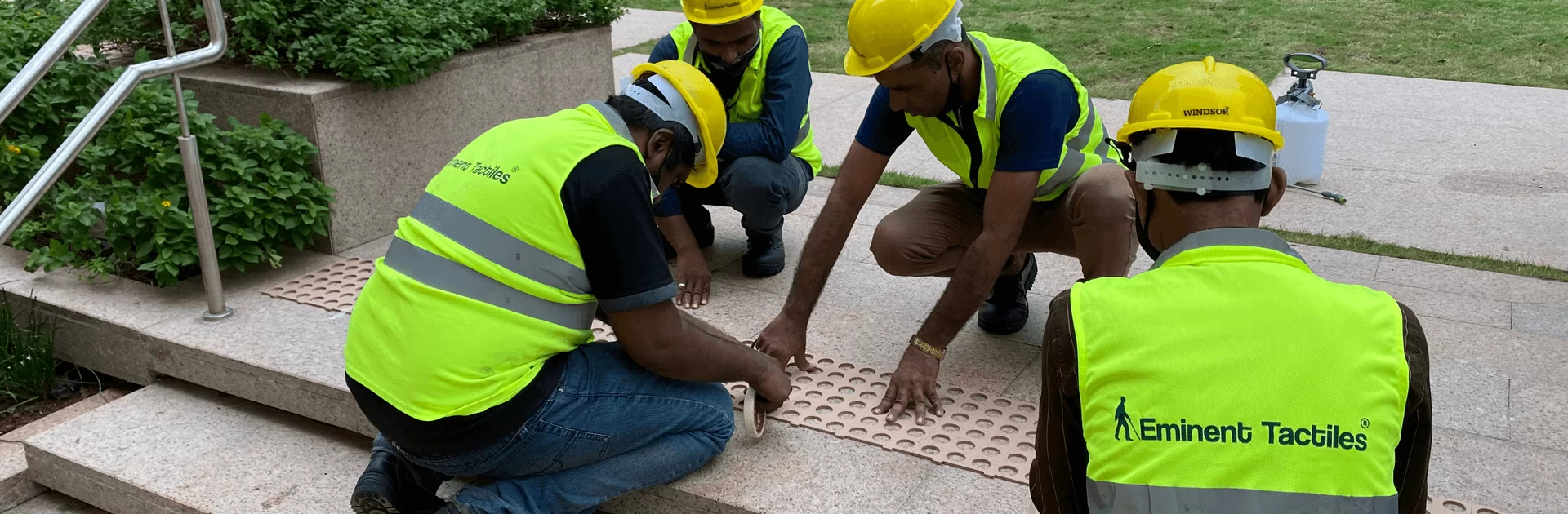
Our Peel and Adhere installation system is a next-generation solution designed for ease of use. It requires no drilling or complex equipment, making it ideal for quick, clean, and effective installations. This innovative method reduces downtime and keeps disruption to a minimum, perfect for facilities that need to stay operational during upgrades.
For those who prefer traditional installation, our PU tactiles can also be fixed using screws or adhesives depending on your project’s requirements.
Designed for Tough Environments
Our PU tactile indicators are built to withstand:
- Extreme point loading
- Side impacts
- High traffic conditions
- Cleaning and maintaining machinery
Supporting Accessibility with Dignity
Tactile information plays a crucial role in helping visually impaired individuals navigate safely and confidently. Our products are designed with the following principles in mind:
- Safety – Prevent accidents in potentially hazardous areas
- Independence – Allow users to move freely without assistance
- Dignity – Provide subtle guidance without drawing unnecessary attention
Technical Excellence and Environmental Care
We take pride in the quality and precision of our products:
- All PU studs are produced with a tolerance of ±1mm in length and ±0.5mm in width and thickness
- Surfaces are symmetrical, uniform, and have a polished, glossy finish
- No electrolytic or chemical polishing is used, making our process environmentally friendly
- Large production capacity allows for fast delivery (typically within 15 to 30 days)
Global Service, Local Care
Eminent Tactiles proudly serves clients worldwide. Whether you’re an architect, contractor, urban planner, or facilities manager, we’re here to support your project with the best tactile solutions available. We also ensure all safety procedures, including COVID-19 guidelines, are strictly followed during manufacturing, packaging, and delivery.
Contact Us
If you’re looking for high-quality, durable, and stylish tactile indicators that meet today’s accessibility standards, look no further than Eminent Tactiles. Get in touch with us to learn more about our products or request a quote for your project.
PU tactile indicators are raised ground surface features made from polyurethane. They provide sensory feedback to assist blind and vision-impaired individuals in navigating public spaces safely.
Warning tactile indicators have raised studs and alert users to hazards such as stairs, ramps, or crossings. Directional tactile indicators have raised bars that guide people along safe walking paths.
Polyurethane is highly durable, UV-resistant, non-slip, and flexible. Unlike concrete or ceramic, PU doesn’t crack, fade, or peel, making it ideal for high-traffic areas.
They can be installed using peel-and-adhere systems for quick application, or with screws and adhesives for traditional, heavy-duty installations.
They provide tactile feedback underfoot or with a cane, warning of hazards or guiding users along a safe route. This allows visually impaired individuals to move independently and safely.
Yes. PU tactile indicators are available in different colours and finishes, allowing them to meet both safety standards and design requirements of modern spaces.